The role of the designer has historically been monolithic and solitary. But as working methods evolve, that role is becoming less clear-cut. Product, marketing, sales, and strategy are converging, and the designer's job is shifting from a single craft to the thread that runs through all of them.
Earlier this year, my team participated in an interesting project to upgrade our existing newsletter series, which communicates product and feature updates to our customers. We found that our current email templates weren't effectively delivering our messages. Additionally, we were transitioning to a refreshed brand identity, and the design team needed to incorporate this new look into our requirements. As a result, the existing template no longer met our needs.
The new communication plan and messaging were clear, and the product marketing team worked diligently to craft messages that would ensure our clients had a complete understanding. The team generated creative ideas to make our content more scannable and meaningful, yet easy to digest. However, as you may know, emails are not particularly design-friendly to build and deliver, and there are some non-negotiable constraints. As designers, we often cannot dictate the fonts used, and the surprise dark mode switch on clients limits our control over colour and layout details.
We started with a unique approach that emphasised minimal text and more visuals, drawing inspiration from web design, rich cards, and mobile micro-moments. We created several content blocks in Braze, allowing us to build emails like building blocks. Because the newsletter runs on a regular cadence, underperforming emails can easily be swapped in with a new content block instead of creating an entirely new template. In fact, this approach saves time for both our designers and the product marketing team.
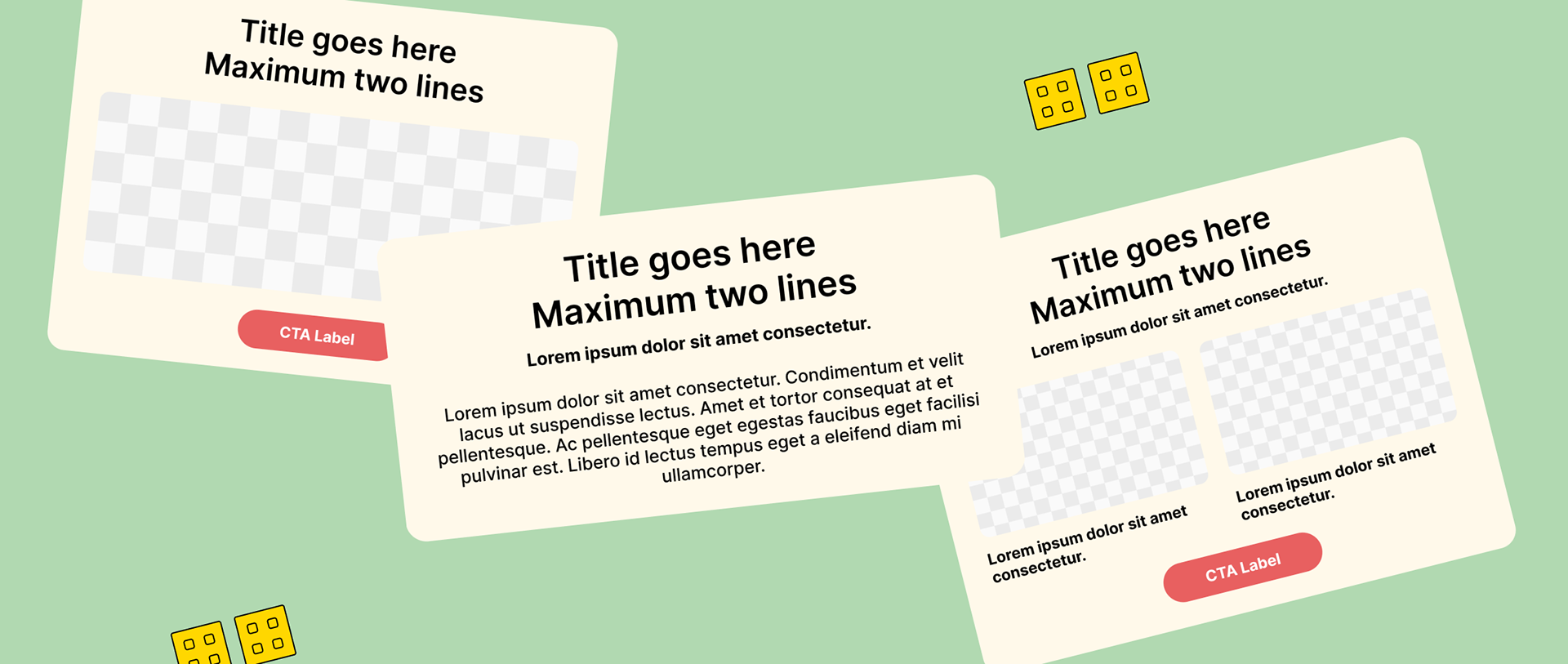
After releasing our first upgraded newsletter, the results were promising. Our open rates increased significantly from 7% to over 19%. Click engagement strengthened as the newsletter evolved, with the CTO rate peaking at 6.1%. The improvements in our subject lines, pre-headers, and overall email design contributed significantly to this success. This achievement and these numbers boosted our confidence and encouraged the Product Marketing team to conduct more A/B testing. We tested various elements, such as the order of images and text, and the effectiveness of illustration infographics compared to photographs, in relation to our key metrics.
"More importantly, by building these templates with reusable blocks, we reduced the time spent on subsequent rounds of email production, marking a major win for our design team."
Although the outcome of this project may not carry the same visual appeal as campaign design or developing a new product UI, designing email templates allowed our team to explore new methods of working and opened up additional opportunities.
This project revealed not only an improved template but also a shift in what my team can own. Previously, the design team relied on assistance from more experienced developers and often limited their contributions to purely Photoshop tasks. Now, with our new setup and enhanced team skills, designers are creating layouts with robust testing and a better understanding. They aim to leverage their skills to create better and more meaningful design experiences that fulfil the original vision.
We achieved this by working closely with the Product Marketing team to bring our offerings closer to the user. My team's designers are now venturing into areas they hadn't explored before. They spend more time understanding product features, marketing strategies, and product success metrics. They discuss efficiency more frequently, and most importantly, we now have more time to dive into details, a luxury we previously lacked due to being overwhelmed with repetitive tasks and an endless production cycle.
I want to paraphrase a quote from one of my previous articles: "The designer I aspire to be is like a Frankenstein figure: someone who can delve deeply into the craft without losing sight of the broader organisational impact; someone who can lead a team with the efficiency of a systems thinker while still advocating for the purpose behind every pixel."
I don't believe that every member of my team should aspire to become the same designer I am, nor should any designer merely replicate their senior's style. Each designer possesses unique talents, which we have traditionally developed in a monolithic environment. However, that environment has changed, and we must first adapt to create a stable foundation. Once that stability is achieved, we can dedicate quality time to nurturing our unique design identities and becoming authentic professionals, all while remaining relevant and purposeful in the industry. To me, that's what evolution looks like in this context.